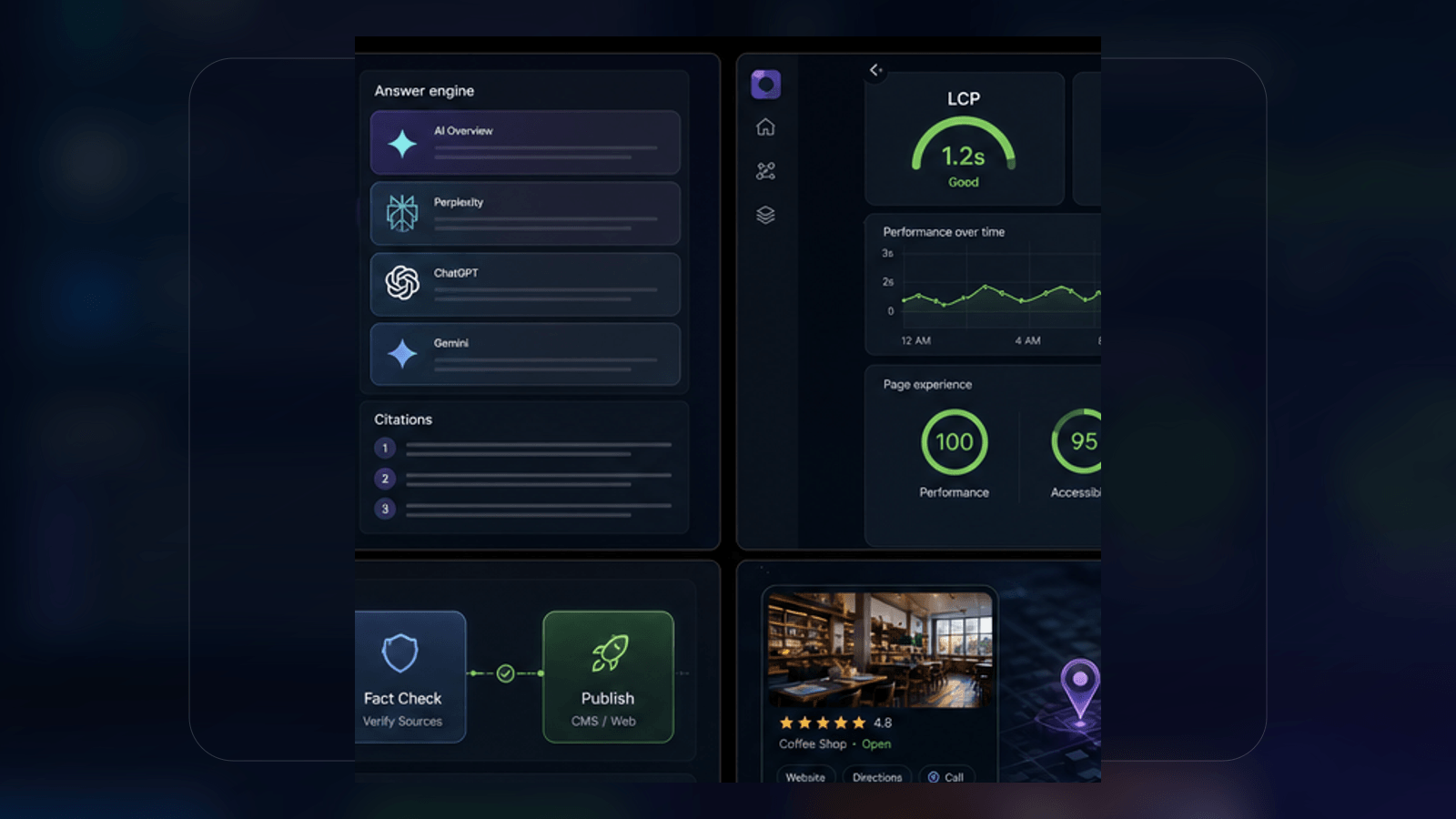
Core Web Vitals is no longer a side topic for digital teams. In 2026, discovery is shaped by search engines, AI assistants, answer engines, social platforms, maps, and the quality signals that connect them. The businesses that win are the ones that make their expertise easy to understand, easy to verify, and easy to retrieve.
For Synbus clients, this means the work has to move beyond isolated tactics. A page can rank, load quickly, and still fail if the message is vague, the structure is weak, or the next action is unclear. A modern article, landing page, dashboard, or workflow should explain the topic, support the reader, and connect business goals to measurable outcomes.
This guide gives a practical framework your team can use before investing in another campaign or redesign. It focuses on the decisions that affect search visibility, user trust, operational speed, and conversion quality. The examples are written for growth-focused businesses that need clear execution, not abstract theory.
Why this matters now
Performance is no longer a technical side report. Core Web Vitals shape how users experience a page, how teams diagnose quality, and how search engines evaluate real-world usability. In 2026, the practical work is about reducing friction across the entire page lifecycle.
Teams often notice the problem only after performance becomes inconsistent. Traffic may look healthy while leads become weaker. Content may be published regularly while few pages earn visibility. Tools may be added to the stack while reporting remains unclear. The better approach is to design the system before the symptoms become expensive.
A strong system gives every stakeholder the same map. Leadership can see what is improving, marketing can prioritize the work that moves demand, sales can understand which pages create qualified inquiries, and technical teams can fix the blockers that limit growth.
What the strategy should include
A useful Core Web Vitals plan looks at rendering, media, JavaScript, CSS, fonts, server response, caching, and layout stability together. Improving only one metric can help, but the best results come from treating performance as part of the product.
1. Clear intent and audience mapping
Start by defining what the visitor or searcher is trying to accomplish. Some people want a definition, some want a checklist, some are comparing vendors, and some are ready to request a quote. The page or workflow should match that intent with the right depth, proof, and next step.
2. Strong structure for humans and machines
Use clear headings, concise sections, descriptive anchor text, and structured answers. This helps readers scan the page and helps search engines understand the relationship between entities, services, problems, and outcomes.
3. Technical quality behind the experience
Speed, crawlability, schema, media weight, indexation, accessibility, and mobile usability are not secondary polish. They are part of the experience. A technically weak page can limit both rankings and conversions even when the content is useful.
4. Measurement that supports decisions
Analytics should show what visitors did, where they came from, and which actions created business value. Good measurement turns guesswork into prioritization. It also makes it easier to explain why a campaign, redesign, or automation project deserves investment.
Practical implementation checklist
The fastest way to improve performance is to convert the strategy into repeatable checks. Your team can use the list below before publishing a page, launching a workflow, or approving a redesign.
- Measure LCP, INP, and CLS with field data before guessing.
- Compress and resize images, serve modern formats, and preload the true hero asset.
- Remove unused JavaScript and delay non-critical scripts until interaction or consent.
- Use caching, CDN delivery, and reliable hosting to reduce server delay.
- Reserve layout space for images, ads, embeds, and dynamic components.
Implementation phases
A practical implementation should be phased so the team can learn quickly without creating unnecessary risk. The first phase is discovery: review the existing pages, data, tools, rankings, workflows, and conversion paths. The second phase is prioritization: decide which fixes protect current performance and which improvements can create the largest lift. The third phase is implementation: update content, technical structure, tracking, design, and workflow logic in a controlled order. The final phase is measurement: compare results against the baseline and decide what should be improved next.
This approach is especially important when the website already has organic visibility, backlinks, indexed URLs, or active lead generation. A rushed change can remove useful signals. A phased plan helps the team keep what is working, fix what is limiting growth, and avoid launching changes that look good in isolation but weaken the full customer journey.
What teams should measure
The right metrics depend on the goal, but the best dashboards usually connect visibility, experience, and business outcomes. Search visibility shows whether the content can be found. Engagement shows whether people understand the page. Conversion tracking shows whether visitors take meaningful action. Operational metrics show whether the team can repeat the process without slow manual work. When these metrics are reviewed together, decisions become clearer and less emotional.
For example, an article might bring traffic but no inquiries because the call to action is weak. A service page might convert well but fail to rank because the topic coverage is thin. A workflow might save time but create inconsistent quality if review rules are missing. Measurement should make those tradeoffs visible before the team invests more budget.
How to maintain quality over time
Digital systems decay when nobody owns maintenance. Search behavior changes, competitors publish better content, tools update, tracking breaks, and pages become outdated. A good maintenance rhythm includes monthly performance review, quarterly content updates, periodic technical checks, and a clear owner for each major workflow. This keeps the system useful after the initial launch.
Quality also depends on documentation. Teams should keep a record of page goals, target audiences, focus keywords, internal links, schema decisions, tracking events, and approval notes. That documentation makes future updates faster because the next person does not have to rediscover why each decision was made.
Common mistakes to avoid
Many teams chase a perfect lab score while ignoring what real visitors experience on mobile networks and slower devices.
- Optimizing only the homepage while high-value landing pages remain slow.
- Loading analytics, chat, and marketing scripts before they are needed.
- Using oversized images inside small card layouts.
- Fixing LCP while creating layout shifts with late-loading banners or fonts.
None of these mistakes are unusual. They happen when teams treat digital growth as separate projects instead of a connected system. The solution is not more noise. It is better planning, cleaner execution, and stronger feedback loops.
How Synbus approaches this work
Synbus combines performance diagnostics with implementation work. We review templates, Core Web Vitals data, hosting, media, scripts, and tracking so improvements support both users and organic performance.
Depending on the project, that may include technical SEO services, maintenance, speed, and security, and web design and development. The goal is to create a reliable growth system, not a one-time asset that becomes stale after launch.
Recommended internal reading
To help visitors and search systems understand the topic cluster, this article connects to related Synbus services and supporting pages. These internal links make the site easier to crawl, give readers a logical next step, and reinforce the relationship between strategy, implementation, and measurable business results.
Helpful external references
High-quality outbound references can support trust when they point to useful documentation or reputable sources. The goal is not to send visitors away from the page, but to show that recommendations are aligned with broader search, analytics, performance, and automation best practices.
- web.dev Core Web Vitals - for official performance metric definitions.
- Chrome Lighthouse performance scoring - for understanding lab diagnostics and scoring.
- Google Search Core Web Vitals - for search-focused page experience context.
Example workflow
A service page with a large hero image may fail LCP because the asset is too large, not preloaded, or blocked by render-heavy scripts. The fix may include responsive image sizes, better caching, critical CSS, delayed marketing pixels, and a lighter component tree.
A useful workflow usually starts with a small audit, moves into a prioritized implementation plan, and ends with reporting that shows what changed. This keeps the work practical. It also helps teams avoid chasing every possible improvement when only a few changes will create the strongest business impact.
FAQ
Are Core Web Vitals ranking factors?
They are part of Google's page experience signals and matter most when combined with relevant, helpful content and strong technical foundations.
What is INP?
Interaction to Next Paint measures responsiveness after user interactions. Heavy JavaScript, long tasks, and expensive event handlers often hurt INP.
Can image optimization improve LCP?
Yes. The largest visible element is often an image, so sizing, compression, preloading, and delivery can strongly improve LCP.
Should every page be optimized?
Prioritize high-value templates first: homepage, service pages, article pages, landing pages, and pages that drive leads or revenue.
Next step
If your site feels polished but performs poorly, start with a Core Web Vitals audit that connects technical fixes to business pages and conversion paths.
For a broader planning conversation, visit the Synbus contact page and tell us what you want to improve first: rankings, speed, conversion, reporting, or automation, then turn that priority into a focused implementation plan.
Google Search documentation is also a useful reference for understanding how technical quality, helpful content, and structured data work together.